

Jul 22.2026
How AI Is Reimagining Tower Crane Operations in Singapore
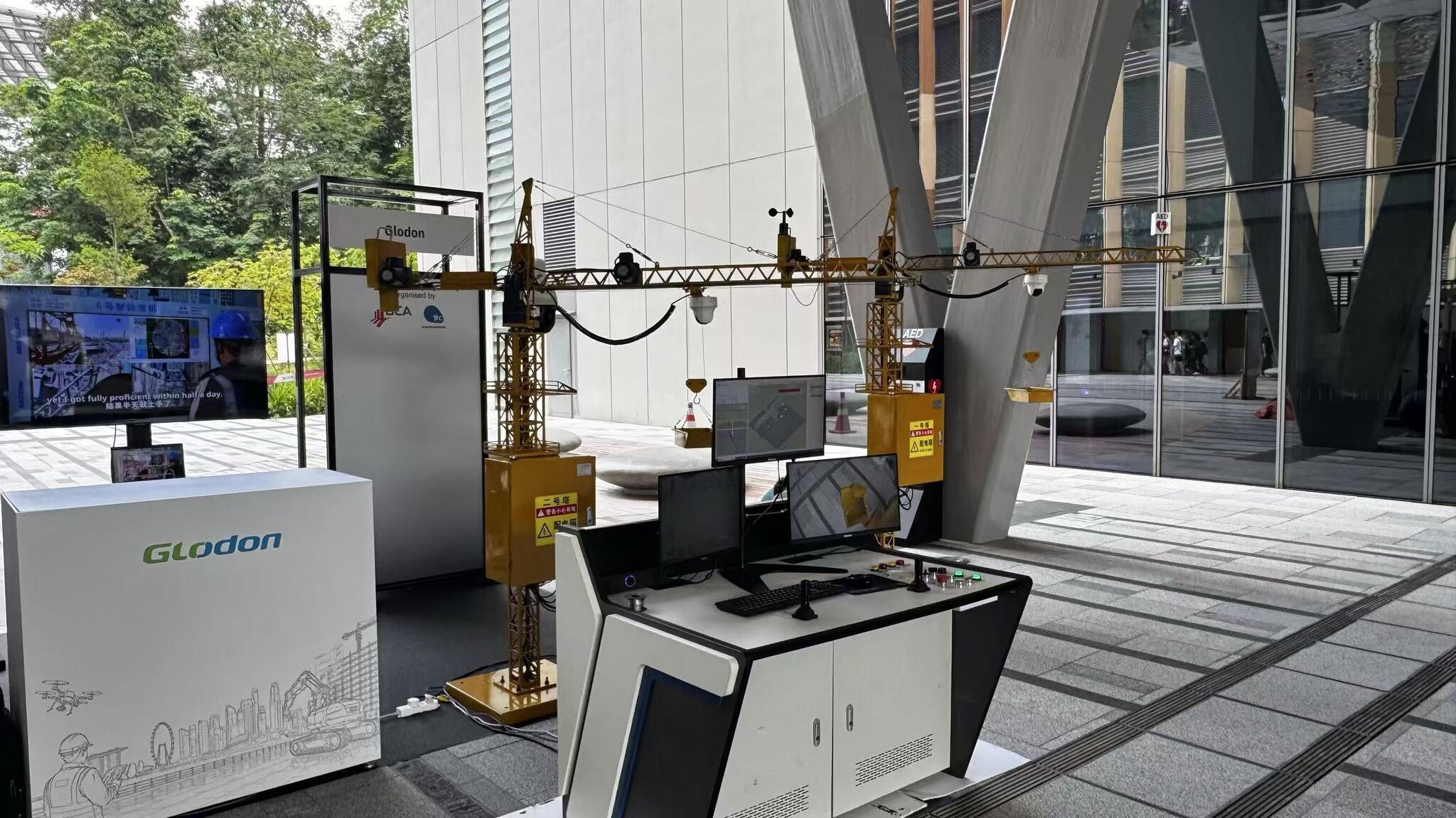
Glodon showcased its AI-Powered Smart Tower Crane Solution at ConTech@PDD in Punggol Digital District on 17 July 2026, demonstrating how advanced construction technologies can deliver safer, more efficient lifting operations, while placing unprecedented focus on tower crane operators' daily wellbeing and career quality of life. Tailored to Singapore's unique site conditions, BCA safety standards and local on-site operation habits, the solution addresses long-standing workforce pain points that have troubled Singapore's built environment sector for decades.
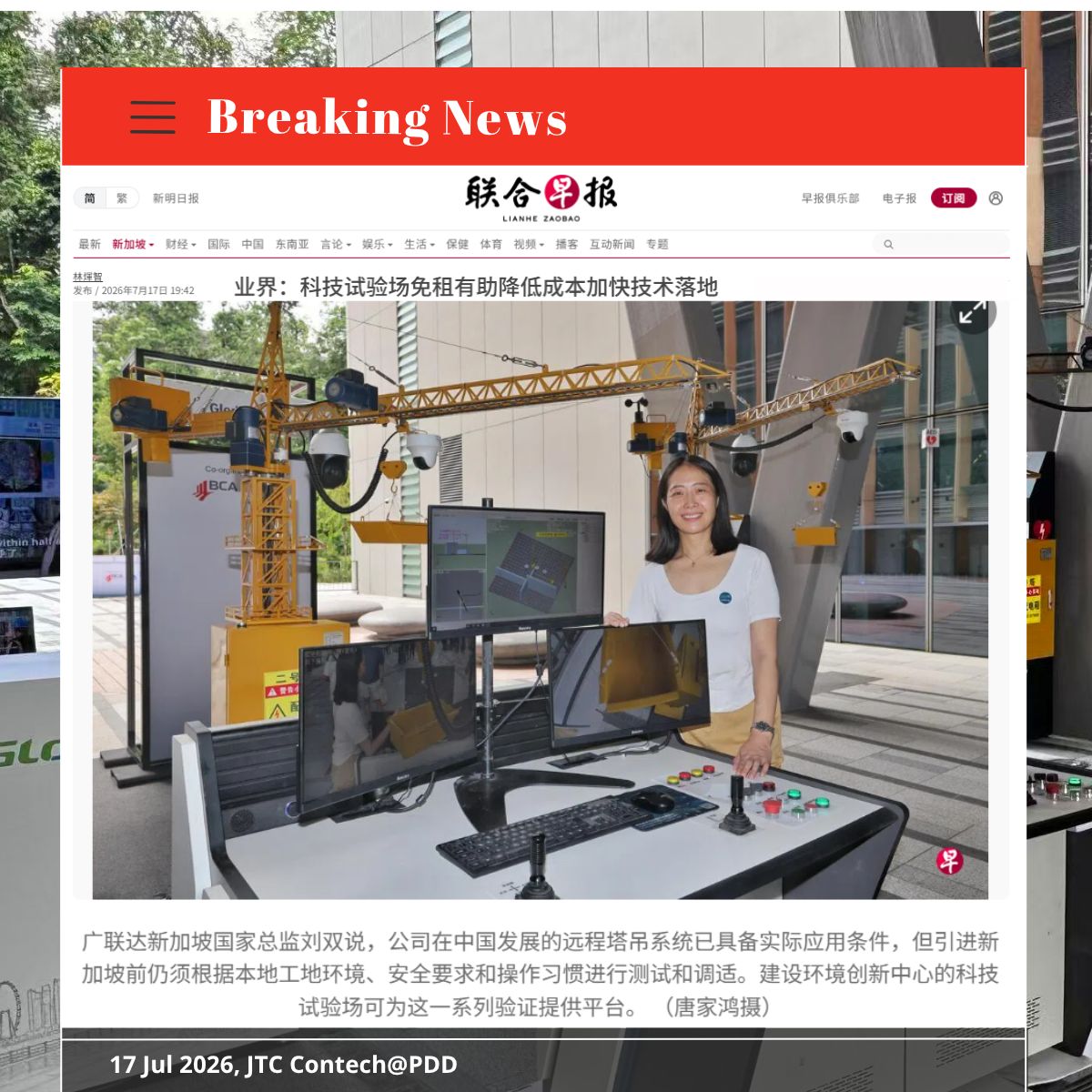
The showcase and human-centric value proposition were recently featured in Singapore's leading Chinese-language daily, Lianhe Zaobao, amid the national industry-wide push to adopt robotics, automation and AI to resolve labour shortages and upgrade workplace welfare standards. Speaking to the paper, Lisa Liu, Country Director of Glodon Singapore, stated that although the integrated smart tower crane system has been fully validated and deployed on mass construction projects across China, rigorous localised testing and fine-tuning are essential to fully align the technology with Singapore’s high-rise, dense HDB PPVC sites and strict worker welfare regulations.
Life of a Traditional Tower Crane Operator: Longstanding Workplace Hardships
For generations, tower crane operators in Singapore endure gruelling, high-risk working routines confined to cramped elevated cabins, a reality widely recognised by BCA and local main contractors including KTC Group.
Every workday starts with a strenuous climb of hundreds of vertical ladder steps, taking 10–20 minutes to reach cabins perched dozens of metres above ground; repeated climbing causes chronic joint strain and physical exhaustion.
Operators spend 8+ hours isolated in tiny, unventilated cabins under Singapore's sweltering humid climate, with ambient temperatures regularly exceeding 40°C. They face constant exposure to strong winds, thunderstorms and tower sway, with no proper rest or welfare facilities on height. Basic daily needs such as meals and washroom breaks are extremely inconvenient, creating persistent discomfort and mental loneliness throughout shifts.
Sustained high-altitude vigilance leads to severe mental fatigue. A single moment of drowsiness or distraction can trigger collision, overload or falling hazards, placing heavy psychological pressure on operators throughout the working cycle. The harsh working environment creates a severe recruitment crisis: young locals are unwilling to take up the role, while veteran operators face accelerated career burnout, worsening the industry's long-term labour gap.
Life of a Remote Tower Crane Operator: Ground-Based Welfare & Human-Centred Upgrade
At the core of Glodon's L3 AI tower crane solution is ground-based remote operation, a revolutionary redesign that comprehensively elevates operators’ working conditions, occupational dignity and long-term career wellbeing, fully matching Singapore’s WSH (Workplace Safety and Health) and worker welfare frameworks.
- Eliminate Physical Hardship & High-Altitude Risks
Operators control the entire tower crane from a spacious, ground-level workstation instead of isolated high cabins. The exhausting daily ladder climb is completely removed, erasing fall risks and chronic musculoskeletal injuries caused by repeated climbing. Operators gain easy access to site rest areas, drinking water and washroom facilities during shifts, solving the most basic welfare pain points of traditional tower crane work.
- Comfortable, Ergonomic Ground Control Station
The dedicated workstation is equipped with adjustable ergonomic seats, multi-screen panoramic visual displays, real-time wind speed, load and lifting data dashboards, and stable indoor temperature conditions. Operators no longer suffer from extreme heat, rain or wind vibration; the low-stress, seated working posture drastically reduces physical fatigue and heatstroke risks under Singapore's tropical climate.
- AI-Assisted Monitoring to Reduce Mental Burden
Built-in AI fatigue monitoring, LiDAR blind-spot detection, intelligent anti-collision auto-braking and overload early warning systems act as an electronic safety buffer. The technology does not replace operators, but takes over repetitive risk judgment work, lowering sustained mental tension and vigilance pressure. Real-time visual feeds eliminate viewing blind zones, removing the anxiety caused by incomplete on-site visibility.
- Broaden Career Accessibility & Retain Skilled Talent
By removing the high-altitude barrier, remote operation opens the profession to a wider pool of skilled workers, attracting younger generations to join the construction sector and easing Singapore’s critical tower crane operator shortage. The low-stress, tech-driven ground workstation extends operators’ viable career lifespan, reducing early retirement caused by physical and mental burnout.
Integrated Core Technology of the AI-Powered Smart Tower Crane Solution
The system seamlessly combines LiDAR sensors, high-precision positioning hardware, artificial intelligence, IoT and real-time visual reconstruction technology. Supported by live panoramic video streams and full operational data synchronisation, ground-based operators gain full visibility over lifting routes, surrounding structures and on-site personnel. The AI module automatically identifies collision risks, overloading and forbidden lifting scenarios, issuing instant alerts and triggering active braking to mitigate safety hazards in advance.
Complementary to remote operation are traceable full-cycle operation logs, unified lifting efficiency BI management platform and non-intrusive plug-and-play hardware installation—no modification to original tower crane equipment, complying fully with Singapore’s equipment type certification and regulatory approval requirements.
Broader Industry Value: Solving Construction Workforce Challenges Beyond Welfare
Beyond tangible improvements to operator wellbeing, the technology delivers comprehensive operational benefits for Singapore main contractors:
-
The ground remote model drastically cuts safety incidents related to high-altitude work, helping contractors meet BCA's smart construction and WSH assessment standards for HDB public housing and MRT infrastructure projects.
-
Equipped with intelligent task scheduling logic, the solution has delivered a 22% improvement in average aerial lifting efficiency on large-scale domestic projects, enabling data-driven, streamlined PPVC precast component installation for mass residential sites.
-
The entire hardware and software suite is fully relocatable across multiple HDB construction yards after project completion, maximising asset utilisation and lowering long-term procurement costs for contractors.
Glodon's Localised Singapore Footprint
Glodon established its Singapore branch in 2011, with a dedicated local team delivering customised products, on-site installation, project-specific operator training and full-lifecycle hardware and software maintenance services. The Punggol Digital District technology showcase reflects Glodon's consistent global market strategy: deploying mature, field-proven core technologies, paired with deep localised adaptation, to deliver practical safety, efficiency and human welfare value tailored to each regional construction market.

Other News

Jan 24.2022
Switching construction production mode to digital twin construction

Jun 13.2022
Survey to Understand Using of Digital Twins in Construction Sector

Mar 31.2022
ConstructionDigital Transformation
Digital building and 7 technologies enable digitalization in construction sector
Nov 11.2022
Glodon Digital Transformation Insights Shared at Smart Buildings Conference 2022
Aug 09.2022
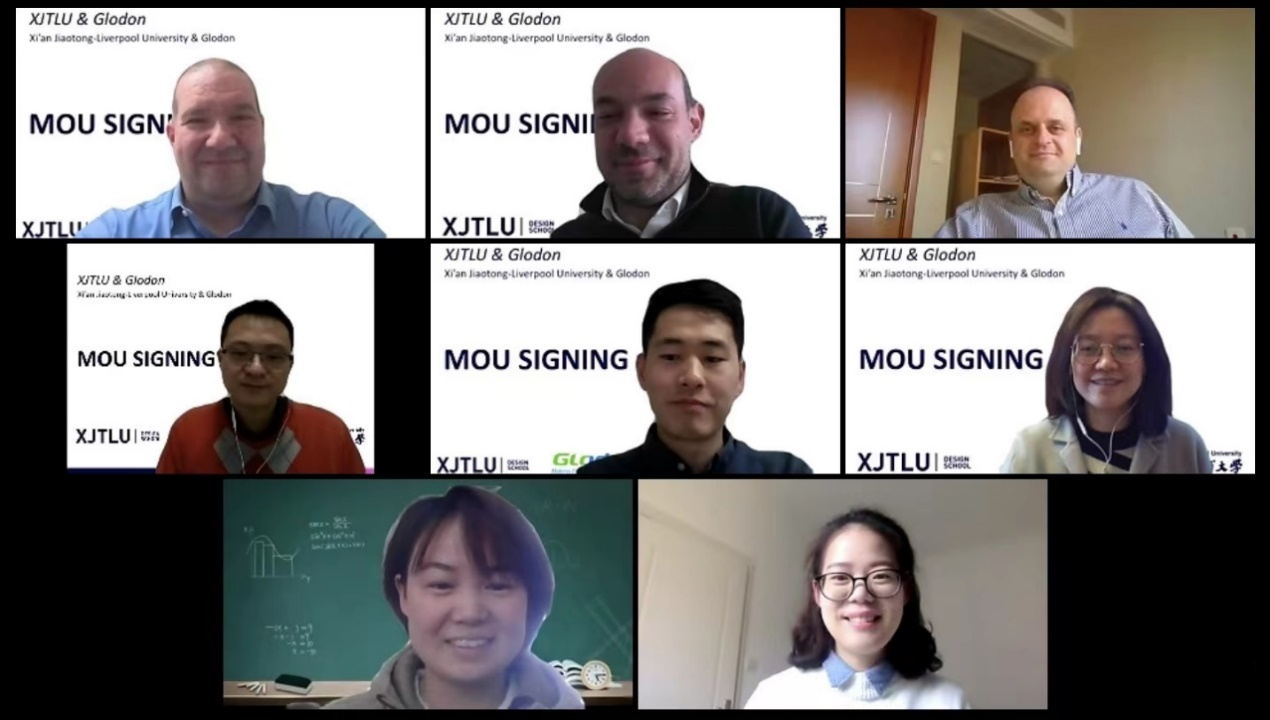
Glodon Advances Industry-university-institute Cooperation with Xi'an Jiaotong-Liverpool University
Sep 21.2023
AI's Transformative Power on Sustainable Construction Practices Across the Building Lifecycle

Jul 30.2021
ConstructionDigital Transformation
Empowering the Industry with Digital Building: How We Build in the Future
Jun 01.2022
Unleash Full Potential of Digital Twins Beyond Asset Operation and Maintenance in Construction
May 16.2023
Glodon Highlights the Power of Digitalisation at UK Construction Week
Aug 02.2022