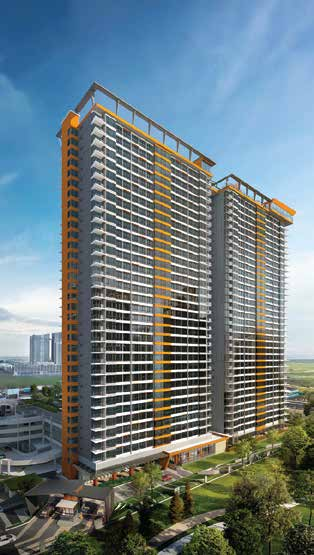
New District Energy Station Project

Hefei, China
-
Project Type & Description: Energy Station
-
Gross Floor Area: 34 million m²
-
Design Institute: China Shanghai Architectural Design & Research Institute Co., Ltd.
-
Glodon Products Involved: Glodon BIM5D, City Information Modeling (CIM) Platform
A New Low-Carbon Energy Station Facilitates the City Sustainable Development
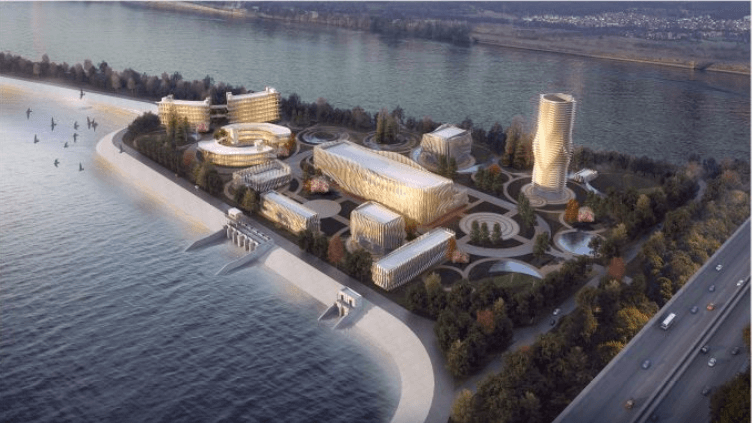
 This project has integrated CIM (City Information Modeling), BIM (Building Information Modeling), and multiple cutting-edge technologies. It endeavors to build an energy station that supports the sufficient energy supply of the Central Business District Area. Aiming to promote the establishment of a Sino-US low-carbon ecological pilot city for sustainable environment development, this energy station should fully consider the protection and design style consistency with the surrounding waterfront ecological landscape and make efforts to learn from and being the international benchmarks.
Solution
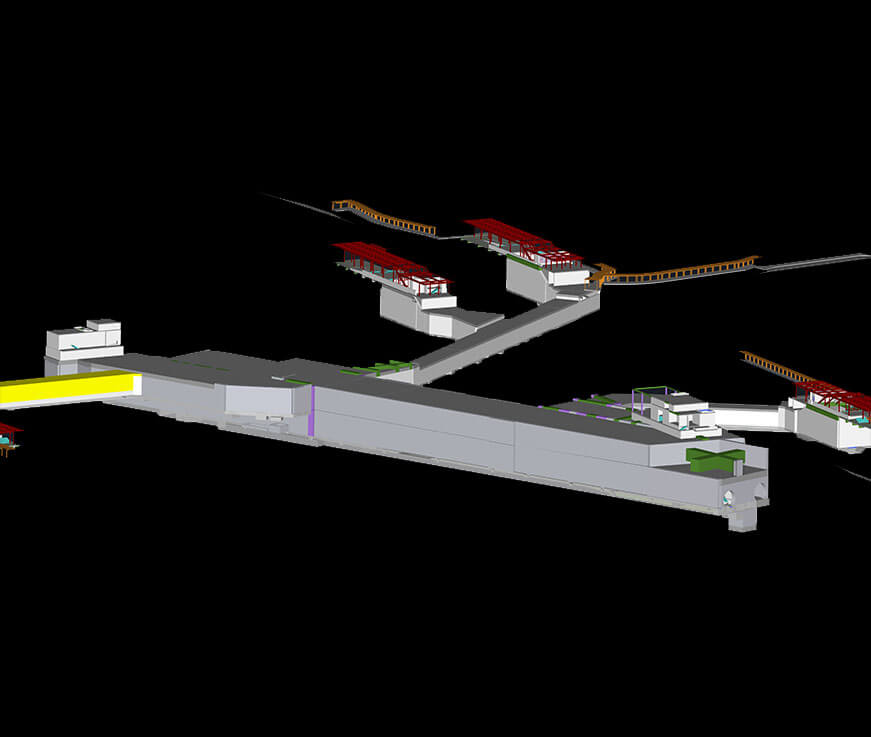
The project provides users with cold and thermal energy by building air-conditioning energy station plus cold and thermal transmission and distribution networks. With three energy stations at the circular energy network, the project provides cold and heat energy for 3 million m² buildings covering businesses, residence, and offices in its serving area.
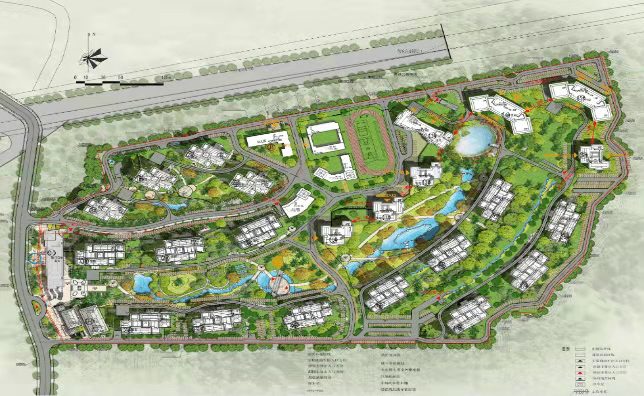
CIM Application, Modelling City Buildings
Determine the gross demand for energy and generate the most reasonable energy plan according to energy prices.
BIM Application
i. Planning and Design Process
80% of drawings throughout the entire life cycle within this project are produced by BIM software.
ii. Collaborative Design & Auto-Rectification
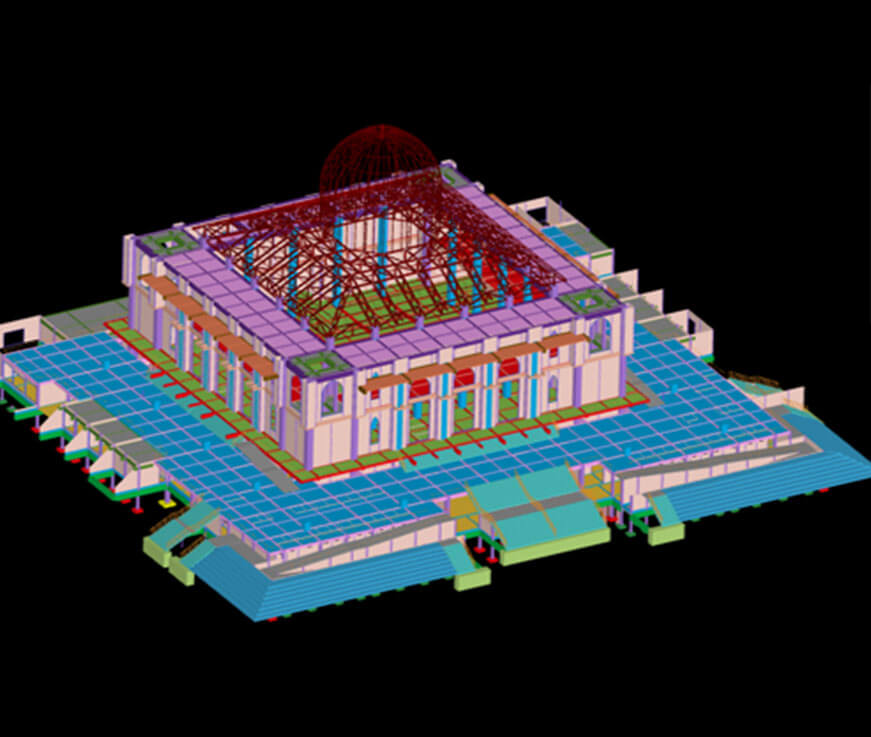
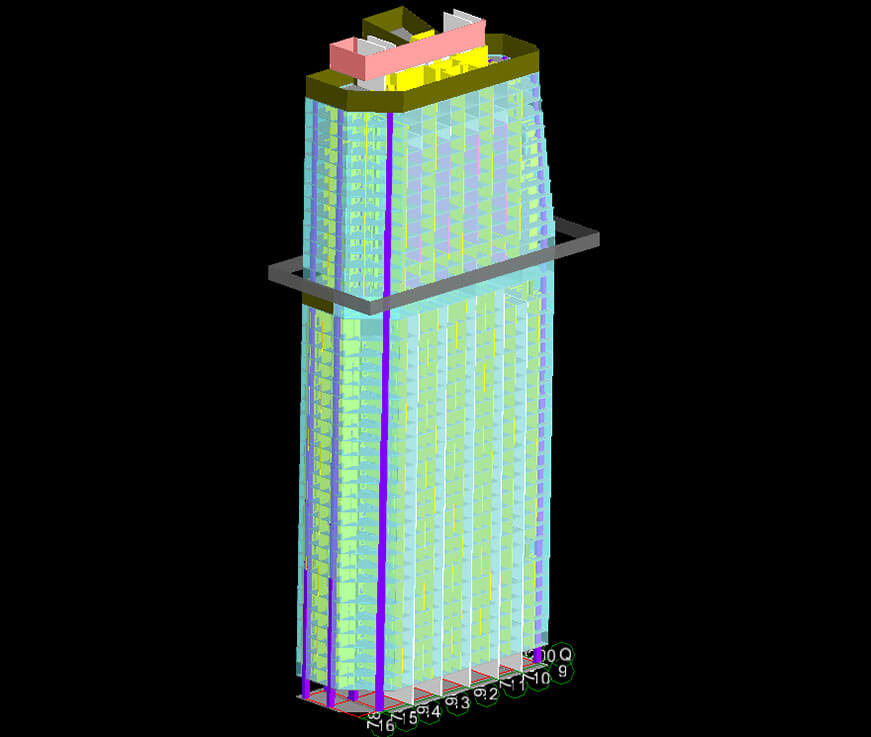
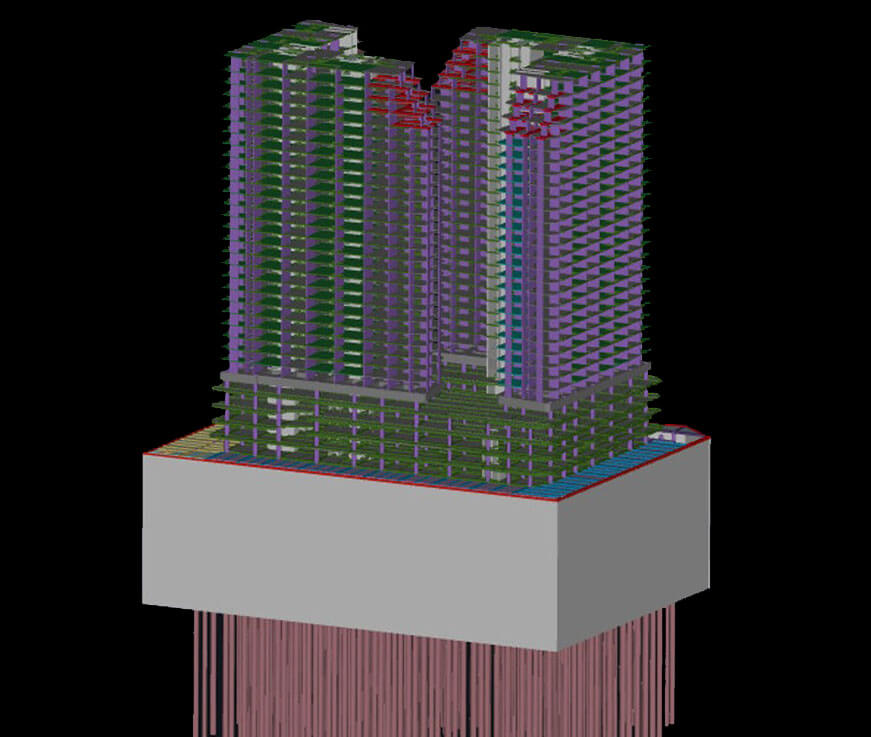
Based on the design features of the energy station and the detailed BIM models provided by different equipment manufacturers, we can achieve automatic design and rectification of some specialties via the replacement of image sources with the collaborative model.

iii. Scheme Preview
Conduct simulation preview of the actual construction performance with Virtual Reality (VR).

iv. Building Design
Inter-layer and space interweaving through BIM technology can compress the energy consumption per unit area to the minimum and achieve maximum ROI (Return on Investment).

v. Technology Specification
This project adopted an innovative approach to utilize BIM design throughout the entire lifecycle of energy storage, Combined Cooling, Heating and Power (CCHP), and other systems.
First, BIM design can smoothly allocate the giant network (diameter larger than 1 m) in the underground space.
Second, we can attain relevant data, conduct stress and hydraulic calculation of the pipe network with BIM. We can allocate and interweave networks of giant water pumps beneath the 2.8m inter-layer while reserving the overhaul and passing space and reducing hoisting costs with structural inter-layers. In addition, a lofty visiting passageway will be preserved on the main pipeline corridor.

vi. Structural Design
 In designing structural schemes, considering BIM collaboration and cooperation with other specialties, we determined the equipment installation, transportation path, and hoisting site in advance before automatically reading the equipment load of the model, thus achieving effective and accurate structural design. What’s more, by establishing a 5D model, we can effectively analyze the cost curve and construction difficulties of structural inverse practices to optimize the process of structural construction.
vii. Cloud Platform Supports Intelligent Operation
The extraction of the performance data in the model and the logical connection between systems can provide data and decision-making foundation for an intelligent operation platform.

Project Performance
i. Complete High Financial Targets
The gross contract value of the district energy station design project based on BIM has reached more than CNY 20 million (approximately 3.1 million USD).
ii. Increase Project Experience
After multiple effective practice, BIM has been used more sophisticatedly. It can separate use in modules, adjust different parameters, and automate multiple processes. Such experience can be also used in similar projects, which can highly enhance the overall project performance.