

Jun 04.2026
Global Smart Construction Forum Held in Shenzhen, Exploring How AI+BIM Can Create Real Value for the Construction Industry
On May 30, 2026, during the 2026 Digital Engineering Summit, the inaugural Global Smart Construction Forum targeting global clients was held at the Shenzhen World Exhibition & Convention Center. Under the theme "How Al and BlM Can Create Real Value for the Construction Industry," the forum brought together participants from the United Kingdom, Japan, New Zealand, Finland, Vietnam, Thailand, the Philippines, Singapore, Malaysia, Indonesia, China's Hong Kong SAR, and other countries and regions.
Representatives from international organizations, professional institutions, universities, industry associations, and enterprises gathered to exchange insights on the integrated application of AI and BIM, the digital transformation of construction and infrastructure, future capabilities, industry collaboration, and sustainable development, jointly exploring new pathways for high-quality development in the AI era.
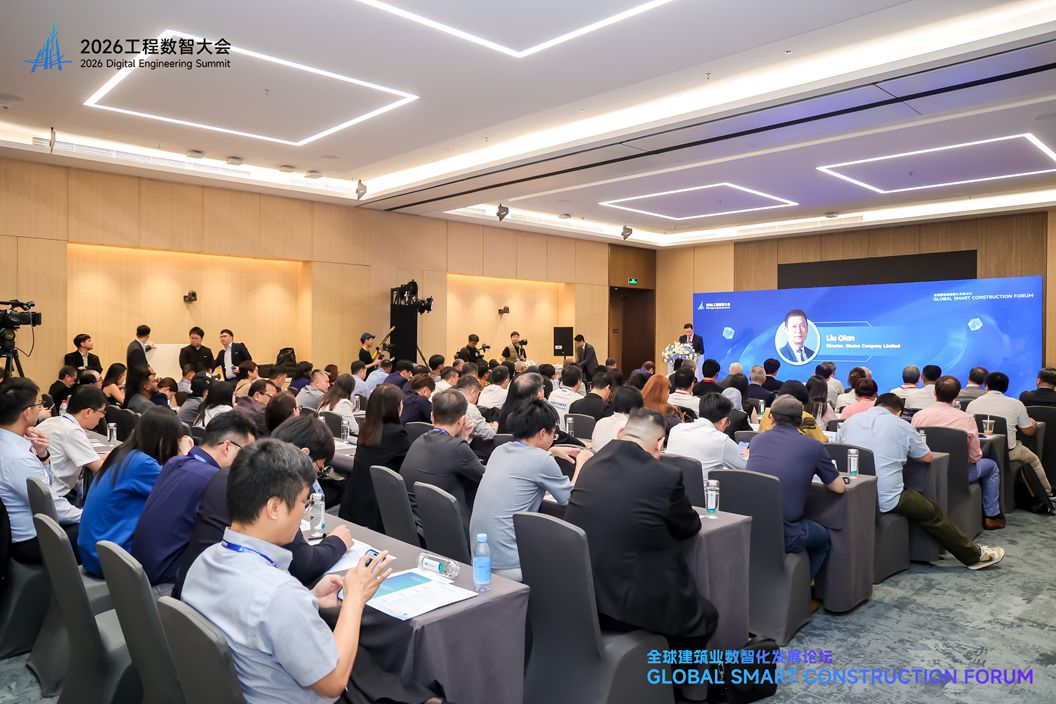
The forum opened with remarks by Liu Qian, Director of Glodon Company Limited and Liu Meng, Head of UN Global Compact China Office. Dr. Valérie Vaughan-Dick, Chief Executive Officer of the Royal Institute of British Architects (RIBA), delivered her remarks via video. Speakers noted that, as a foundational industry supporting urban development and better living, the construction sector is now at a critical intersection of digital, intelligent, green, and low-carbon transformation. AI, BIM, and digital technologies are not only tools for improving efficiency; they must also serve real business scenarios and respond to the industry’s practical needs in quality, safety, cost, collaboration, and sustainable development.
Returning Technology to Real Construction Scenarios
In his remarks, Liu Qian said that for AI and BIM to create real value for the construction industry, the key is to return to real industry scenarios and address practical pain points. Technological innovation cannot remain at the conceptual level. Only when deeply integrated into the full process of engineering and construction can it generate sustainable value in project collaboration, cost control, site safety, and green construction.

He also emphasized that the development of AI depends on solid digital foundations. As an important carrier connecting data, workflows, and business scenarios, BIM will play a fundamental role in smart construction. Looking ahead, the digital and intelligent transformation of the construction industry requires the joint participation of global industry organizations, professional institutions, research bodies, enterprises, and technology partners. The industry should move beyond fragmented, one-off digital solutions and build globally adaptable, configurable platform capabilities that connect data, business processes, and diverse project scenarios, while fully respecting the industry standards, working practices, and real needs of different markets. Only in this way can digital and intelligent technologies create scalable and sustainable value for the global construction industry.
Advancing Technology for Good and Responsible Innovation
In her remarks, Liu Meng said that buildings are far more than assemblies of steel and concrete; they are carriers of better living and a medium for dialogue between humanity and nature. In the face of climate change, resource constraints, and people’s aspirations for a better life, AI, BIM, and digital technologies are providing new solutions for the construction industry.
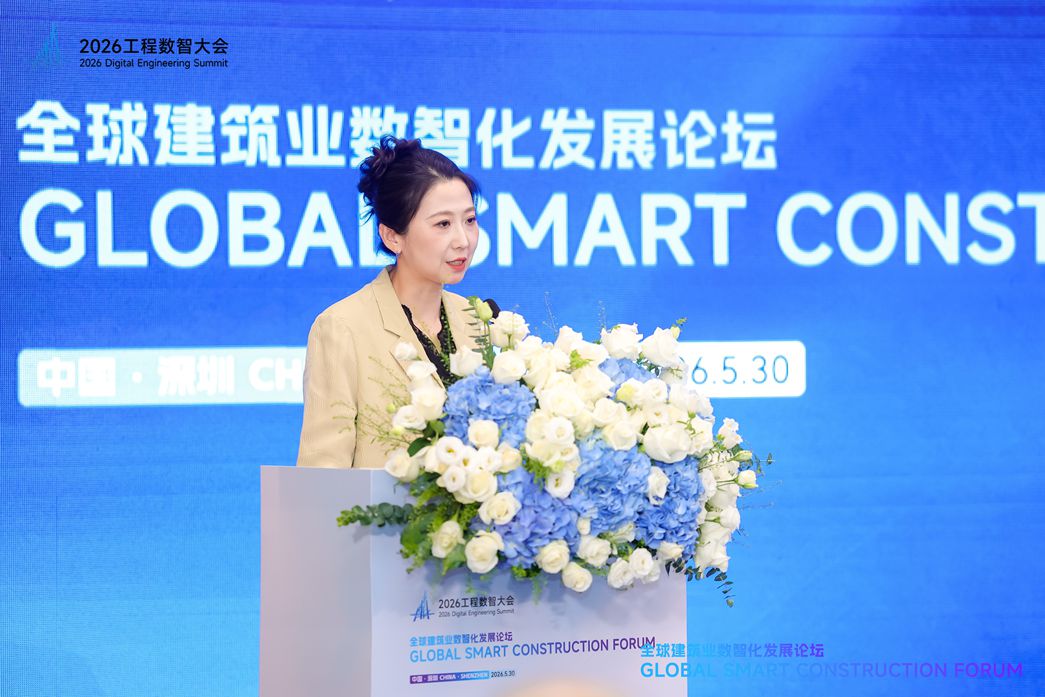
She emphasized that the ultimate value of technology should be to serve people, the planet, and better living environments. At the same time, while AI unlocks enormous potential, it also brings challenges related to ethics, equity, safety, and governance. The construction industry should embrace technological innovation in an open, rational, and responsible manner, and advance toward a safer, more efficient, greener, and more sustainable future.
Turning Digital Ambition into Measurable Value
In her video remarks, Dr. Valérie Vaughan-Dick said that the global architecture, engineering, and construction sector is at a critical point of transformation, with low-carbon, resilient, and sustainable built environments becoming a shared goal for the industry. Digital and intelligent technologies are no longer optional tools, but key driving forces reshaping the way we design, build, and operate.

She noted that the deep integration of AI and BIM is an important direction for translating digital ambition into measurable value. She also emphasized that AI is not a replacement for professional expertise, but a powerful amplifier of the capabilities of architects and industry professionals. Real value comes not only from greater efficiency, but also from ethical use, data security, intellectual property protection, transparency, and professional judgment.
Future Skills, Digital Transformation and AI+BIM Applications
During the keynote session, Tony Osude, Chief Market Delivery Officer of Royal Institution of Chartered Surveyors (RICS), delivered a presentation on “The Skills of the Future in Construction for an AI World.” He noted that AI is prompting the construction industry to re-examine its capability system. The companies that lead in the future may not necessarily be those with the most AI pilots, but those that can effectively combine technological capability, data discipline, and governance mechanisms.
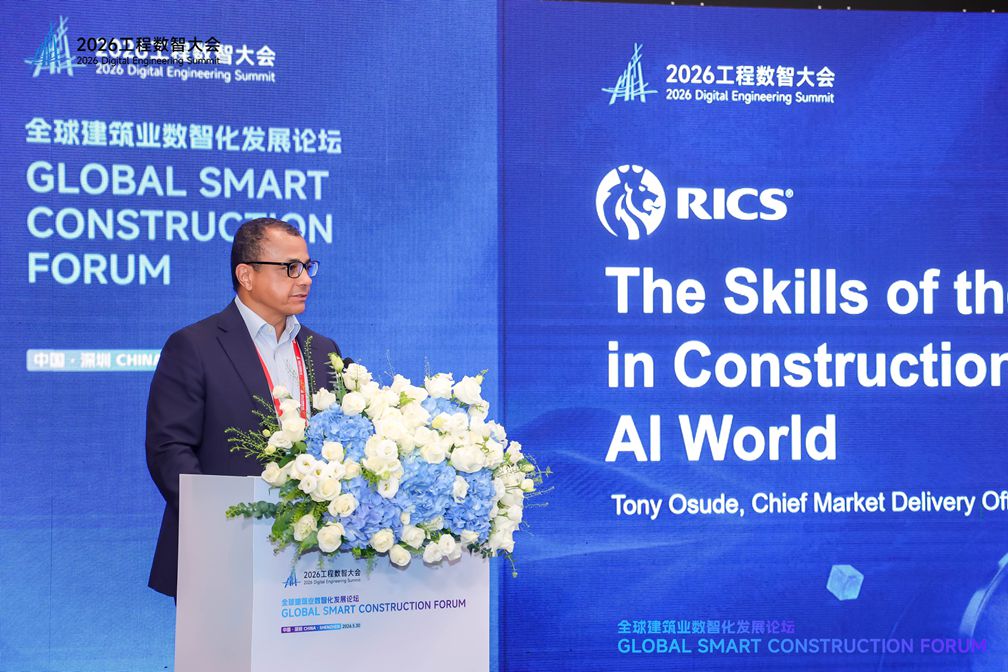
Osude said AI will not simply reduce the value of professionals, but will change the way they work, shifting their role from traditional task execution to data interpretation, output validation, risk judgment, and decision support. In response to issues of trust and accountability arising from AI adoption, the industry also needs clearer governance frameworks, professional standards, and capability-building systems.
Prof. Tim Broyd FREng CEng FICE FRSA, Director of Institute for Digital Innovation in the Built Environment at University College London (UCL), delivered a keynote speech on “The Digital Transformation of Construction and Infrastructure.” Starting from the complexity of construction and infrastructure projects, he discussed the foundational role of BIM, data environments, information management, and project collaboration in industry transformation.
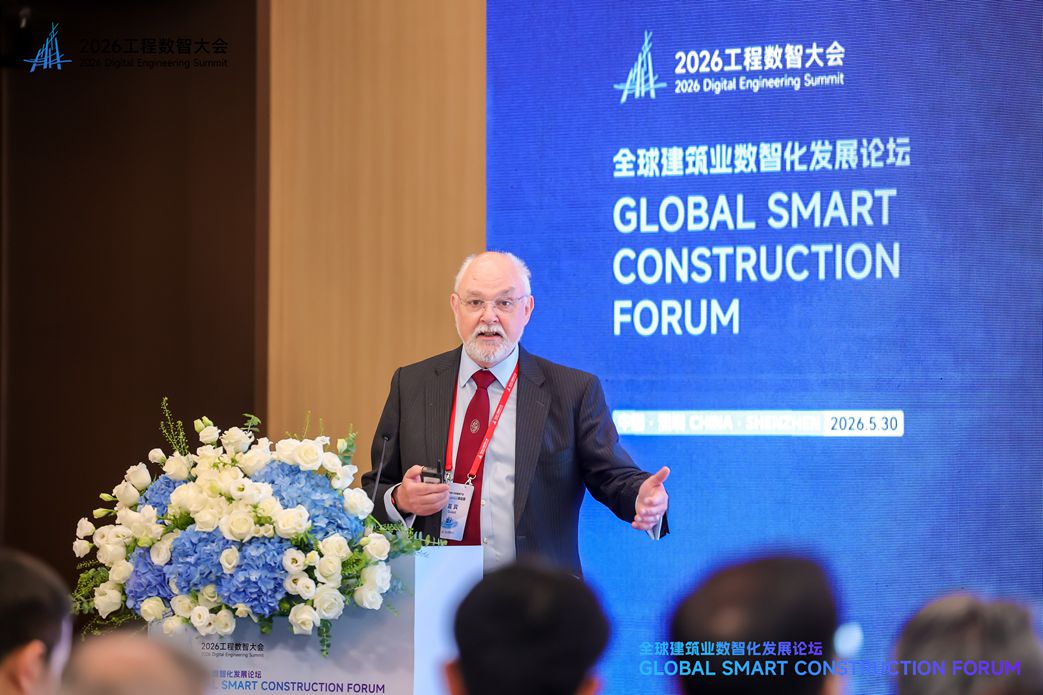
He noted that digital transformation is not the application of a single tool or technology, but a systemic change involving processes, organizations, data, and governance. The construction industry has long faced challenges in productivity, quality control, cost overruns, asset operation, and lifecycle management. Only by establishing a more open, trusted, and connected information environment can the industry support higher-quality project decision-making, delivery, and operation.
Wataru Matsumoto, Vice President of Glodon, shared his perspectives on AI and BIM integration in his presentation “Realizing the Potential of AI Technology Through BIM Applications.” He said that although AI is developing rapidly across many industries, the construction sector still faces challenges such as insufficient high-quality structured data, uneven levels of digitalization, fragmented business processes, and limited integration between AI applications and real-world scenarios.
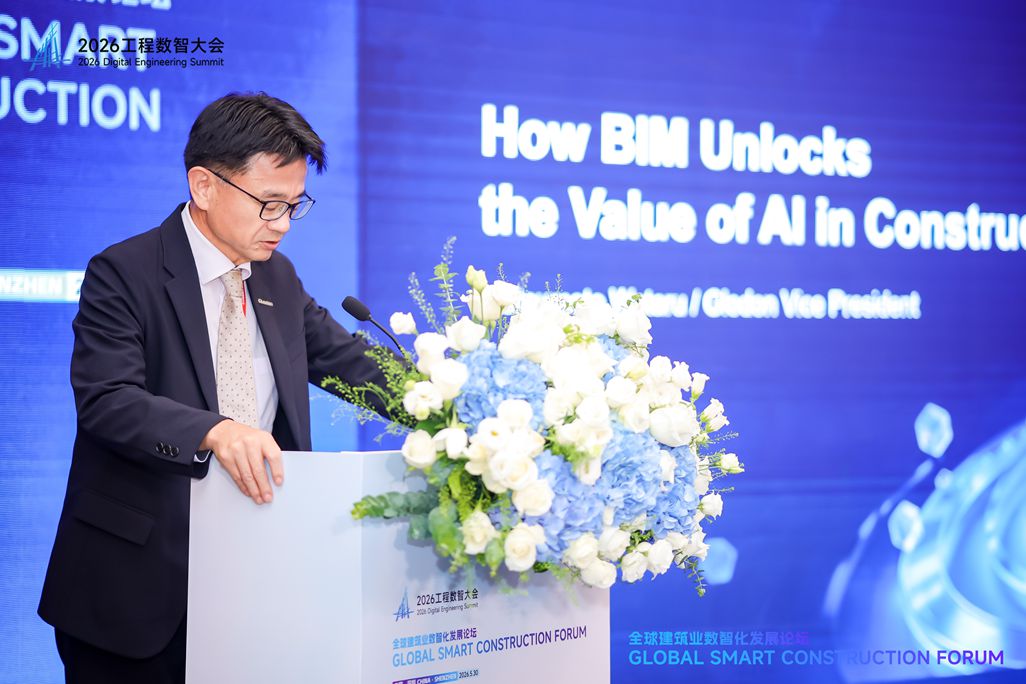
To truly unlock the value of AI in construction, three elements must work together: industry-specific AI, high-quality digital data, and high-value business scenarios. BIM is not only a digital model, but also a key foundation for carrying engineering data, connecting business processes, and supporting AI-based calculation and judgment. As BIM evolves from a static model into a dynamic, platform-based data environment, AI+BIM will create more direct business value in design collaboration, cost management, construction management, safety management, and project operations.
Preparing for Scaled AI Adoption
The panel discussion, themed “How the Construction Industry Can Prepare for Wider AI Adoption,” featured Yun Langsheng, Senior Vice President of Glodon Company Limited; Doris U. Gacho, Executive Director, Philippine Overseas and Domestic Construction Board (PODCB), Construction Industry Authority of the Philippines (CIAP); Umi Lyu, Head of Development, China & Asia, Royal Institute of British Architects (RIBA); Natalie Yong, Managing Director, LCH Quantity Surveying Pte Ltd, and 1st Vice President, Singapore Institute of Surveyors and Valuers; and Sunny Ip, Partner, Deloitte Consulting.
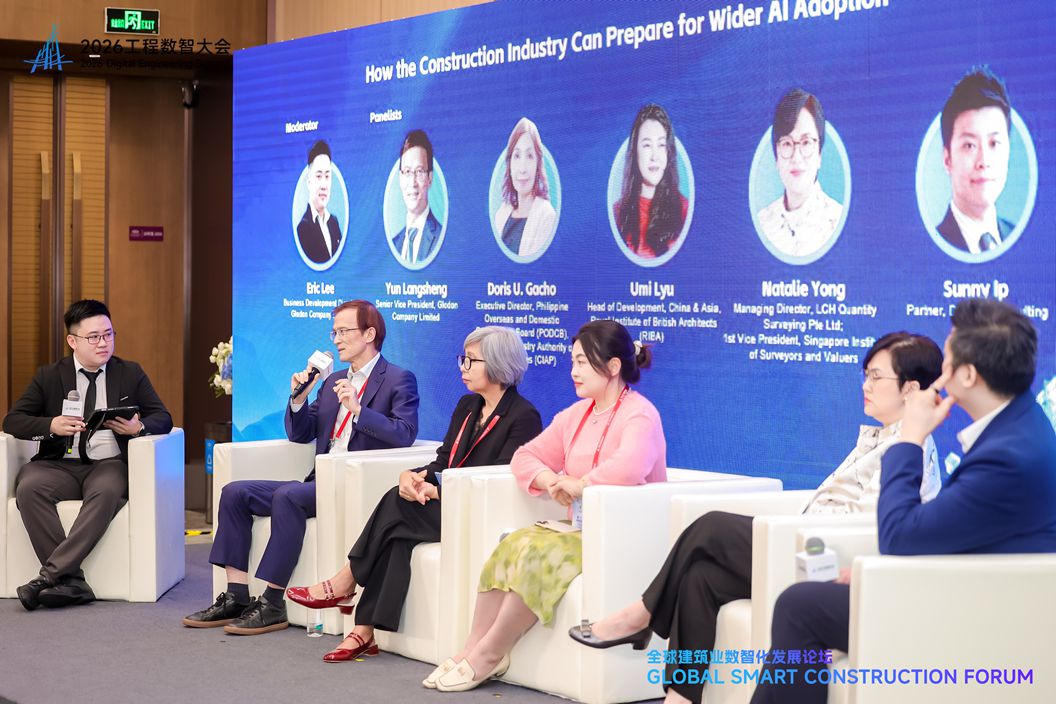
The panelists exchanged views on the industry foundations, data standards, professional capabilities, organizational transformation, international collaboration, and governance mechanisms needed for scaled AI adoption. They agreed that scaled AI application in construction cannot rely on isolated technological breakthroughs alone. It requires coordinated progress in industry consensus, standards development, talent cultivation, scenario validation, and ecosystem collaboration.
Deepening International Collaboration
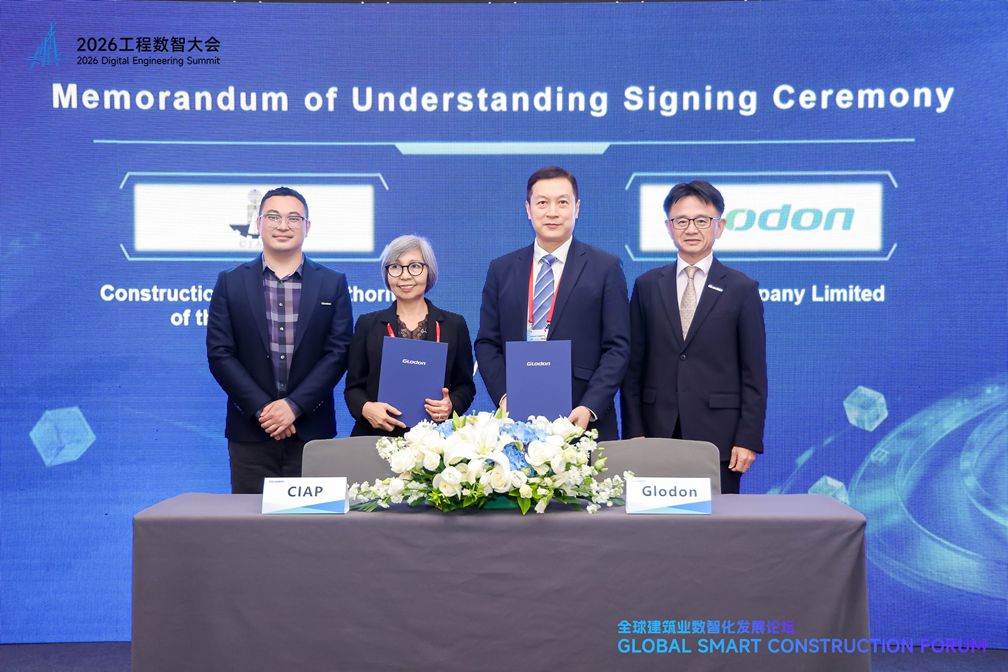
During the forum, Glodon signed Memoranda of Understanding (MoUs) with the RICS and CIAP. The signing will further deepen Glodon’s collaboration with international industry partners in digital construction, AI and BIM application, professional capability building, industry exchange, and the sharing of best practices.
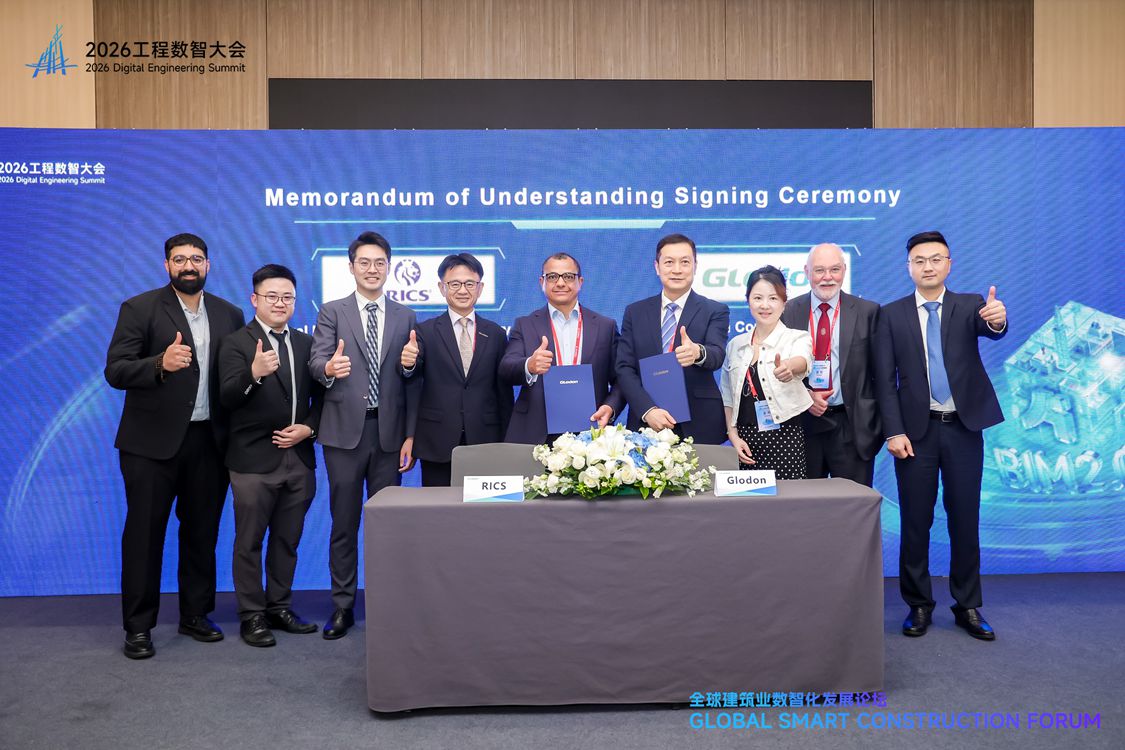
The cooperation with RICS will help promote the integration of professional capabilities, industry standards, technology governance, and international exchange in the context of digital transformation. The cooperation with CIAP will explore areas such as the digital transformation of the Philippine construction industry, talent development, and international collaboration, providing support for the high-quality development of the local construction sector.
As a technology company with long-standing expertise in the digitalization of the construction industry, Glodon will continue to focus on the full lifecycle of engineering and construction, promoting the deep integration of AI, BIM, big data, and other technologies with real business scenarios. Working with global partners, Glodon will continue to build an open and collaborative industry ecosystem. Looking ahead, Glodon will keep serving industry development through digital technologies and empowering industrial upgrading through intelligent capabilities, helping the global construction industry move toward a more efficient, greener, smarter, and more people-centered future.

Other News

Jul 12.2021
Jul 12.2021
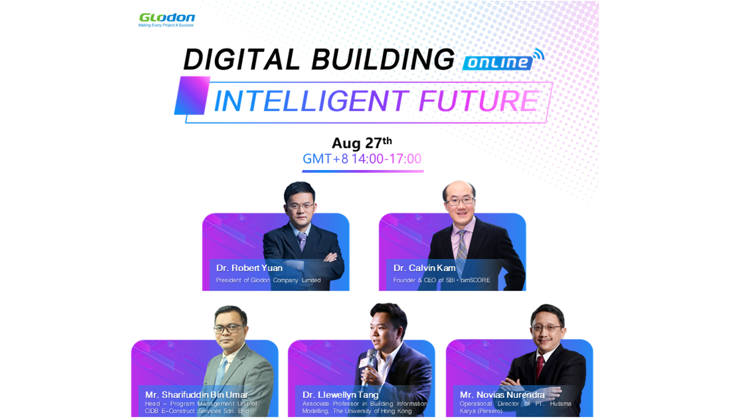
"Digital Building, Intelligent Future" ——11th Digital Building Annual Summit
Jul 12.2021
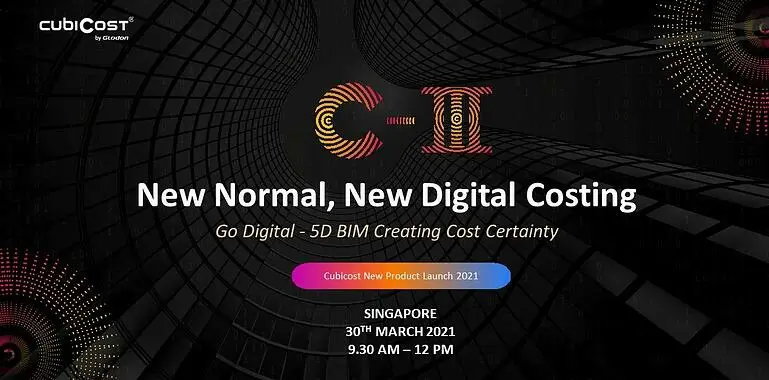
Glodon Product Launch 2021 – Further Empowering the Digitalization of Construction Industry Globally
Jul 12.2021
Jul 12.2021
Capacity Building: Glodon Indonesia and Indonesian Education Sector

Jul 12.2021

Jul 13.2021

Jul 12.2021
Jun 01.2022
Glodon Lays Foundation Stone for Digital Building Pilot Project in Greater Bay Area

Sep 07.2021